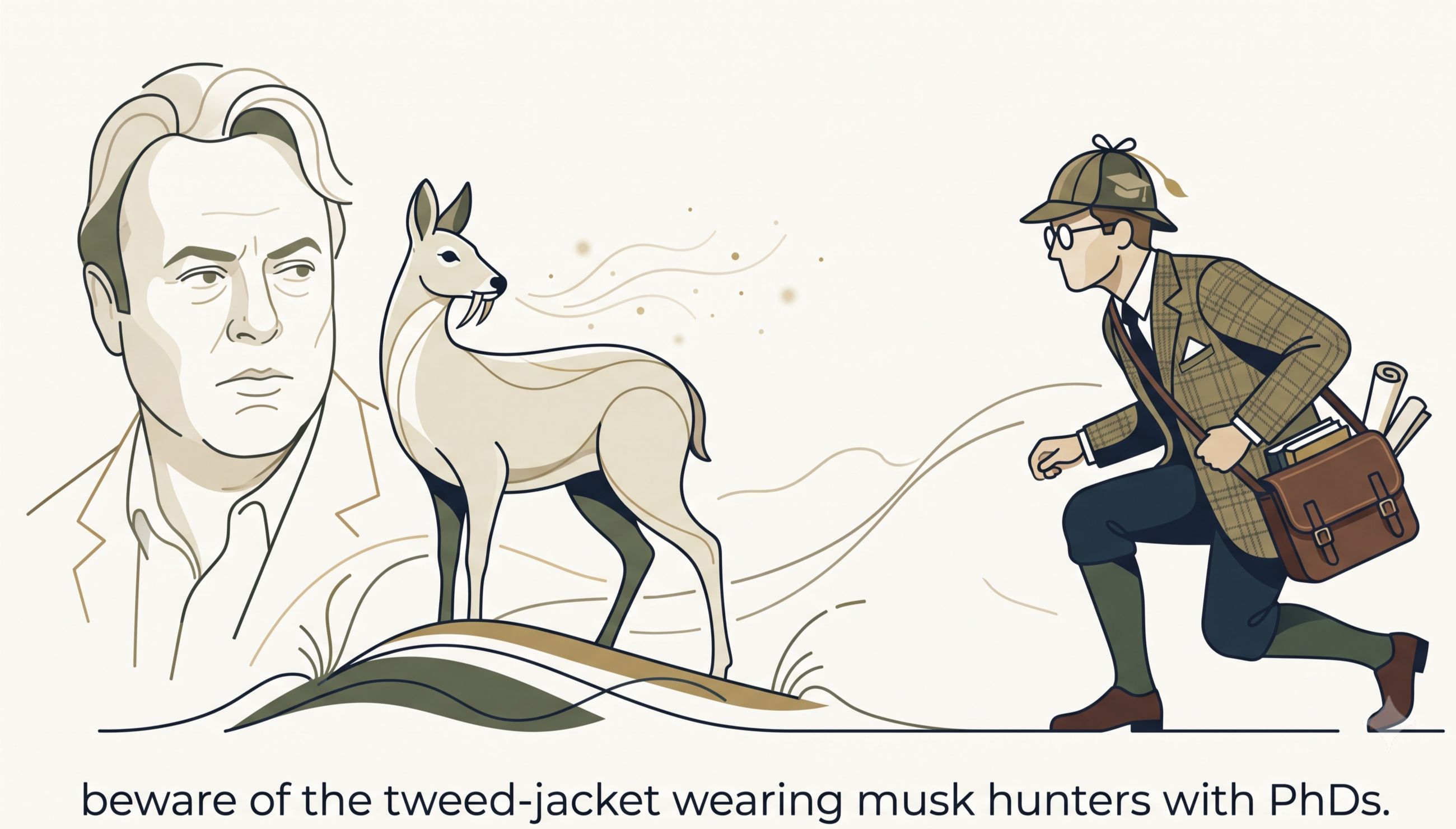
Whenever you hear a guru or spiritual teacher—anyone talking broadly about spirituality, but especially Buddhism—speak in this very affected, overly peaceful way, it can feel off. They demonstrate their calmness as if showing it off. This passive, sedate, almost anesthetized tone triggers a subtle unease in most of us. Some inner radar activates. I’d call it the “fake guru sensor,” though many of us can’t quite identify why.
Here’s how I see it. There is a mechanism behind this behavior, and it relies on reinforcing misconceptions. In the Western Buddhist community, there’s a prevailing misunderstanding that seems to arise partly from a Shravaka style of handling afflictions, or kleshas, by suppressing and minimizing them —but, more fundamentally, from a misconception about what kleshas actually are.
A very popular mistranslation defines kleshas simply as “emotions.” I’ve seen this often: people believe that to be a Buddhist, you must eschew all emotion, reject emotionality entirely, and even speak in a way that reflects this detachment. (Just to be clear: some klesha ARE emotions, some aren’t (ignorance), but there are emotions, such as love or the sense of urgency and existential dread called saṃvega, which are not klesha).
Genuine practitioners—especially in the Vajrayāna tradition, among Tibetans—rarely behave like this. Occasionally, you meet someone who is naturally very calm and collected, and their genuine serenity is infectious, but when they speak, it never feels pretentious. Tibetans or Bhutanese don’t suffer from this specific misconception because their term, nyonmgpa, fully conveys what klesha means. They don’t believe emotions as such must be rejected because they don’t conflate the term nyonmgpa with them. Their speech often does carry emotion and even intensity. Ordinary Tibetans, when they start talking, might get riled up, even end up shouting, even while discussing Dharma, and don’t get shy about it. Many Buddhist teachers speak with great enthusiasm. At times, when appropriate, they might even speak with a tinge of anger, righteous indignation, or justified outrage. Leaders might give a rousing speech, teachers might make jokes or scold students during teachings.
Not to even mention the fact that on the path of Vajrayana — klesha themselves are seen as fuel, if skillfully directed, not something to necessarily be suppressed or rejected outright.
Some western Buddhist teachers, however, seem to think emotions should be entirely suppressed, so they often speak in this characteristic flat, lifeless manner (sometimes accompanied by a lot of smiling - a result of decades of marketing dharma as a tool for happiness, which is another topic for another time). One might suspect they're doing it to demonstrate how advanced they’ve become at what they believe a spiritual path is. The irony is that such display māna — conceit, is itself a klesha!
The next stage: the Asian gurus who adopt this affected calmness—this pretentious neutrality— reflecting those Western misconceptions back at their audience.
In the best-case scenario, such performative teachers might have simply fallen prey to the same misunderstanding. Or perhaps they’re adopting to “market demands”, thinking that if this is what the western students want - then that’s what they should get. But in that case - the tail is wagging the dog, or bizarrely: orientalism in reverse. In the worst-case, they knowingly, cynically mirror the misconception back at Western audiences, taking them for fools, motivated by ulterior motives, because this is what generates interest, engagement and ultimately - income.
This really tarnishes the image and the good name of the Dharma in the West, especially for people of consequence. Some even get turned off by Dharma as a whole, or might even become detractors to Buddhism. People like Slavoj Žižek critique "Western Buddhism" as a fetishization of calm, and he’s got a point. David L. McMahan makes a similar point in his Making of Buddhist Modernism.
Even if we can’t always articulate it, I’d say that this is exactly what sets off that inner fake-guru alarm.
PS. The reason I mention “people of consequence” is actually quite important. I believe in networks of patronage as a way to sustain lineages and institutions, rather than fee structure which makes people feel like a “consumer” of the dharma that gurus are selling like a commodity. The entire system of commodification is toxic to the doctrine. It makes students feel like they “demand” a service from the masters, who themselves might feel they’re “selling” something. To avoid it and create such networks of patronage, for powerful wealthy donors to be attracted, dharma should shine in all its untarnished glory, with its dynamism, and splendour, not dimmed by misconceptions.
PPS. It’s not “making” dharma attractive to wealthy donors, it’s revealing that it IS already attractive to all, thus attracting all kinds of people, not only the most psychologically and materially needy, but also the powerful and influential, helping build a strong support and community. It’s not indistinguishable from the marketing I condemn. I’ll go further, I won’t condemn marketing as such - but fake marketing. But that’s beside the point. The point is: the tradition and thus its representatives should always firmly stand their ground, they need not be ashamed or coy about what it is or alter it for any individual, including the wealthy and powerful. Such a stand, with NO pandering and genuineness is precisely what will attract them.